3d dam
digital asset management
3d workflow

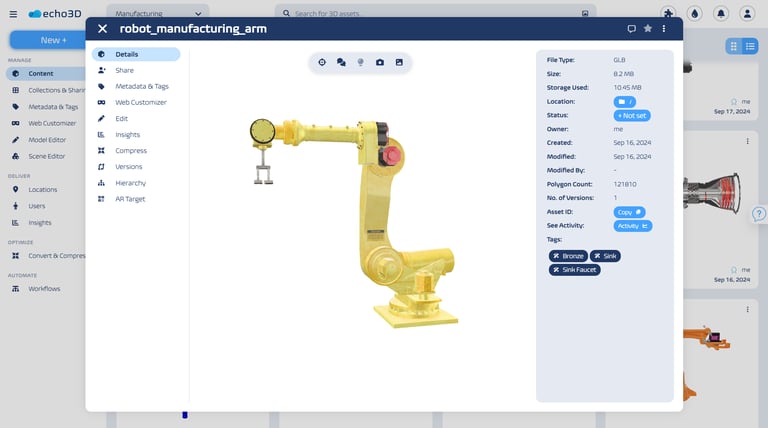
For organizations handling large-scale content, selecting an ill-fitting 3D Digital Asset Management (3D DAM) system is a costly mistake. A poorly drafted 3D DAM RFP often results in protracted deployments, poor user adoption, and platforms that fail to align with actual operational workflows. You risk paying for superfluous features while your fundamental challenges remain unaddressed.
A robust 3D DAM RFP prevents this scenario. It compels you to clarify business objectives, aligns stakeholders from the start, and establishes an equitable method for comparing vendors. For enterprise teams, it safeguards long-term needs regarding scalability, security, and system integration.
Download the Guide to Implementing 3D Digital Asset Management
A precise 3D DAM RFP minimizes risk and accelerates the vendor selection process.
Every requirement should be driven by specific business objectives and use cases.
Aligning stakeholders is just as critical as the list of features.
Implementing the right structure ensures vendor comparisons are objective.
What a 3D Digital Asset Management RFP Is
Defining Business Goals and Use Cases for a 3D DAM
Core Functional Requirements to Include in a 3D DAM RFP
Vendor Evaluation Criteria
3D Digital Asset Management RFP Checklist
How echo3D Fits a Modern 3D DAM RFP
Final Review: Write an RFP That Drives the Right Decision
A 3D Digital Asset Management RFP is a formal document utilized to assess 3D DAM vendors. It delineates your business necessities, technical specifications, and expectations regarding delivery and ongoing support. Most enterprises issue a 3D DAM RFP when they are ready to replace outdated platforms or standardize tools across various departments.
An effective 3D DAM RFP goes beyond a simple feature list; it elucidates the lifecycle of an asset—how it is created, stored, approved, delivered, and governed. This context enables vendors to propose viable, realistic solutions rather than offering standardized presentations and wasting time testing tools that do not suit your business requirements.
The 3D DAM RFP also serves as a mechanism for internal alignment. Departments such as marketing, IT, legal, and operations frequently have diverging priorities; the RFP process forces these groups to reach a consensus on requirements, potential risks, and criteria for success.
When executed correctly, a 3D DAM RFP establishes shared expectations. Vendors grasp what is paramount, and internal teams understand the decision-making framework. This minimizes unforeseen issues during the implementation and adoption phases.
A 3D digital asset management system provides organizations with a centralized hub to house, organize, and distribute images, videos, 3D models, and other media. It supersedes scattered folders, shared network drives, and manual procedures with a structured ecosystem that supports scalability and collaboration. For enterprises managing massive volumes of content, a 3D DAM becomes the bedrock for accelerated workflows and consistent brand delivery.
A 3D DAM assists in resolving several prevalent pain points, including:
Challenges in locating the correct asset rapidly.
Redundant or obsolete files dispersed across teams.
Inconsistent branding across different channels.
Manual formatting, resizing, and versioning tasks.
Lack of insight into asset usage and performance metrics.
3D DAMs are frequently utilized for brand libraries, marketing initiatives, e-commerce media, and providing global teams with access to sanctioned assets. When media must be accessible across a multitude of devices and platforms, 3D DAMs are indispensable for hosting, transforming, and delivering content.
To define business goals for a 3D DAM, begin by identifying the media users and the frequency of use. Define what success looks like—whether it is faster content production, error reduction, or enhanced performance. Lucid goals help mold requirements and ensure the 3D DAM supports both immediate needs and future expansion.
Use cases serve as the bridge between high-level goals and evaluation. Each use case demonstrates how a 3D DAM underpins a specific workflow, such as product updates, regional content distribution, or campaign launches. A robust 3D DAM RFP includes several high-value use cases that mirror daily operations.
These use cases direct vendor scoring. Rather than asking if a feature exists, you assess how effectively it supports the scenario. This methodology makes 3D DAM RFP responses easier to compare and more significant for decision-makers.
A well-composed 3D DAM RFP should explicitly outline the functional capabilities your organization demands from a management platform. Defining these prerequisites upfront assists vendors in responding accurately and ensures the solution can sustain enterprise-scale workflows. Each requirement should describe not merely what the feature does, but how it aids your teams and business objectives.
While requirements vary by business, some of the most critical to include are:
Asset Ingestion and Upload: Support for bulk uploads, massive files, and diverse formats, with dependable handling for images, video, and 3D content. Your 3D DAM RFP should clarify how files enter the ecosystem—whether via manual uploads, bulk imports, or automated feeds. You should also specify supported file types, size constraints, and validation rules that preclude broken or incomplete assets.
Metadata and Tagging: Adaptable metadata models, custom fields, and tagging capabilities that make assets simple to locate and manage. Describe required fields, controlled vocabularies, and taxonomy rules. Since metadata drives search, automation, and reporting, your 3D DAM RFP should reflect how teams actually classify and reuse assets.
Search and Discovery: Sophisticated search with filters, faceting, and relevance ranking to surface the correct assets instantly. Define expectations for keyword search, filters, and faceted navigation. A strong 3D DAM RFP also emphasizes the need for rapid results, even as asset libraries expand into the millions.
Version Control: Precise tracking of asset versions, updates, and approvals to avert duplication and confusion. Explain how teams update assets, track modifications, and revert versions when necessary. Your 3D DAM RFP should also define who can view, edit, approve, or publish assets at each phase.
User Roles and Permissions: Granular access controls that safeguard assets and support distinct teams and partners. You do not need a fully mapped structure, but having a basic framework for role-based access controls assists in simplifying security management and protecting sensitive materials.
Workflow and Approvals: Tools for reviews, approvals, and status tracking that streamline content production. Outline what different teams require to adapt to their workflows, and how your chosen 3D DAM fits in.
Transformation and Optimization: Built-in media transformations that support resizing, formatting, and performance necessities. These can accelerate workflows, enhance user experience, and conserve costs (such as bandwidth or compute power) over time.
Distribution and Delivery: Secure sharing, public links, and CDN-backed delivery for rapid global access.
Integrations and APIs: Robust APIs and native integrations that link the 3D DAM to CMS, e-commerce, and marketing platforms.
Analytics and Reporting: Visibility into asset usage, performance, and adoption across teams.
Security and Compliance: Support for encryption, audit logs, and enterprise compliance standards.
In the RFP, describe each requirement with context, expected outcomes, and any scale or performance needs. This level of detail helps vendors demonstrate how their 3D DAM fits your enterprise environment and long-term roadmap.
Download the Complete Guide for 3D Digital Asset Management today
Technical fit determines whether a 3D DAM scales or becomes another isolated repository. A comprehensive 3D DAM RFP should outline integration needs early to prevent future surprises. This includes how the 3D DAM connects to existing systems and future tools.
APIs and SDKs are core requirements for enterprise teams. Your 3D DAM RFP should request documented REST APIs, supported SDKs, and examples of actual integrations. This helps you assess flexibility without committing to custom work.
Single Sign-On (SSO) is another baseline expectation. Specify supported identity providers and authentication standards. A 3D DAM RFP should also address user provisioning, role mapping, and offboarding workflows.
Maintaining security and compliance is crucial for large-scale operations. Provide details on encryption standards, data residency requirements, and the necessity of audit logging. If your organization operates in regulated regions, the 3D DAM RFP should specify relevant certifications and compliance frameworks.
Strong integration reduces long-term maintenance. When systems connect cleanly, teams spend less time fixing sync issues. Your 3D DAM RFP should reflect this by prioritizing documented, supported integration paths.
Performance is often overlooked in early 3D DAM discussions, but a well-written 3D DAM RFP makes it explicit. You should describe how quickly assets must load and the geographic locations of users and customers.
Optimization requirements for images, videos, and 3D models should be stated clearly; explain the expectations for format handling, responsive delivery, and adaptive bitrate streaming. This helps vendors respond with realistic performance capabilities.
Your 3D digital asset management RFP should also cover global delivery. Inquire how assets are cached and served across regions. This matters for marketing sites, product pages, and campaigns with international reach.
Most importantly, avoid using vague language in your 3D DAM RFP. Instead of asking for "fast delivery," define acceptable load times or performance goals. When performance criteria are clear, it is easier to assess and contrast 3D DAM RFP submissions.
Governance protects brand consistency and legal compliance. Your 3D DAM RFP should explain how assets move from creation to approval to publication, including required review stages and responsible roles.
Approval workflows need structure. Describe how reviews occur, who approves content, and what happens when changes are requested, in addition to access roles. Define role-based permissions, group access, external sharing rules, temporary access, and expiration policies.
Finally, ensure that audit trails are included and support responsibility tracking. Explain what actions must be logged and how long records should be retained. Governance features in a 3D DAM RFP ensure assets remain compliant as teams and regulations evolve.
Before drafting a 3D DAM RFP, it is helpful to define how vendors will be evaluated. Clear criteria make it easier to narrow options and focus on platforms that can support enterprise needs today and in the future. These factors also ensure internal teams align on what matters most in a long-term partner.
Some common vendor evaluation criteria include:
Scalability: The capacity to support growing asset libraries, users, and traffic without performance degradation.
Reliability: Proven availability, robust infrastructure, and consistent performance across regions.
Security Certifications: Support for encryption, access controls, audit logs, and compliance requirements, as well as certifications like ISO 27001 or SOC 2 Type 2.
Integration Support: APIs and native integrations that connect seamlessly with existing systems should be available to accelerate implementation.
Ease of Use: Intuitive interfaces that reduce training time for non-technical users.
Customization: Flexible metadata, workflows, and delivery options that fit unique business needs.
Vendor Stability: A strong product development trajectory, active development, and long-term market presence.
Support and Services: Clear onboarding, documentation, and responsive technical support.
Defining these criteria early helps teams evaluate 3D DAM vendors with confidence and consistency.
Download the Guide to Implementing 3D Digital Asset Management
A complete 3D DAM RFP helps enterprises gather accurate, comparable responses from vendors. Expanding on each section ensures vendors understand your environment, priorities, and expectations before proposing a solution.
If you are still undecided about what your 3D digital asset management RFP should look like, here is a checklist of the essentials:
Company Overview: Describe your organization, industry, and market presence. Include information about team size, geographic footprint, and any regulatory considerations that may affect asset management.
Project Objectives: Explain why you are investing in a 3D DAM now. Outline the business problems you want to solve and the outcomes you expect to achieve.
Current Asset Landscape: Detail the volume, formats, and types of assets you manage today. Include growth expectations over the next few years.
User Groups and Roles: Identify who will use the 3D DAM and how. Clarify internal teams, external partners, and required permission levels.
Functional Requirements: Include must-have capabilities such as uploading, metadata management, search, workflows, and approvals. Explain which features are critical versus optional.
Video and 3D Support: Describe your needs for video and 3D model hosting, streaming, transformations, and playback quality. Include any requirements for adaptive streaming or large file handling.
Integration Needs: Specify systems the 3D DAM must connect with, such as CMS, e-commerce, or marketing tools. Note whether integrations should be native or API-based.
API and Extensibility: Outline automation, customization, and developer requirements. This helps vendors assess how well their platform fits your technical workflows.
Performance and Scalability: Define expectations for availability, global delivery, and load handling. Include traffic spikes or seasonal demand patterns.
Security and Compliance: List standards, certifications, and access controls your organization requires. Mention audit logging and data protection needs.
Analytics and Reporting: Describe what insights you need about asset usage and performance. Explain how these metrics support decision-making.
Migration Plan: Explain where existing assets live today and how they should be moved. Include metadata mapping and cleanup considerations.
Support and Onboarding: Define expectations for training, documentation, and ongoing support. Clarify service level requirements.
Pricing and Licensing: Ask for transparent pricing models and usage limits. Request clarity on overages and contract flexibility.
Implementation Timeline: Share target milestones and launch goals. This helps vendors propose realistic rollout plans.
Evaluation Criteria: Explain how proposals will be reviewed and scored. Clear criteria create a fair and efficient selection process.
echo3D meets the core requirements enterprises look for when evaluating a 3D digital asset management platform. It provides a centralized system for storing, organizing, transforming, and delivering images, videos, and 3D models at scale. Flexible metadata, tagging, and search tools help teams find the right asset quickly, while role-based access controls support secure collaboration across departments and regions.
Media optimization is built into the platform, allowing assets to be resized, reformatted, and compressed automatically for different devices and channels. echo3D APIs make it easy to integrate media workflows into existing CMS, e-commerce, and marketing systems. Developers can automate uploads, transformations, and delivery using clear, well-documented endpoints.
Advanced processing capabilities add another layer of control by enabling custom pipelines for moderation, approvals, and dynamic delivery rules. Combined with global CDN delivery, powerful performance, and enterprise-grade security, echo3D supports both operational efficiency and long-term scalability. These capabilities align closely with common 3D DAM RFP requirements and help enterprises manage media with confidence.
The best 3D DAM RFP connects business goals to real workflows. It balances functional detail with technical clarity, and also sets measurable expectations for performance, governance, and support. When written clearly, it reduces risk, shortens timelines, and improves adoption.
Enterprise teams benefit most when the 3D DAM RFP reflects how assets are created, delivered, and reused at scale. This approach avoids tools that manage files well but fail in real-world delivery.
As you finalize your 3D DAM RFP, review it through the lens of long-term fit. Ask whether requirements support growth, integration, and global performance. This is where platforms like echo3D often align with modern needs.
Including echo3D in your 3D DAM RFP evaluation allows you to assess 3D DAM and delivery together. For teams that care about optimization, APIs, and governed workflows, that combination can shape a more effective decision.
Enhance your brand’s visual storytelling with echo3D’s advanced 3D optimization and management tools. Join the enterprises transforming their digital assets into unforgettable experiences. Reach out to our team today.